How to Layer a Men's Denim Motorcycle Vest Over Your Riding Jacket
By Adam Milo
3 Views
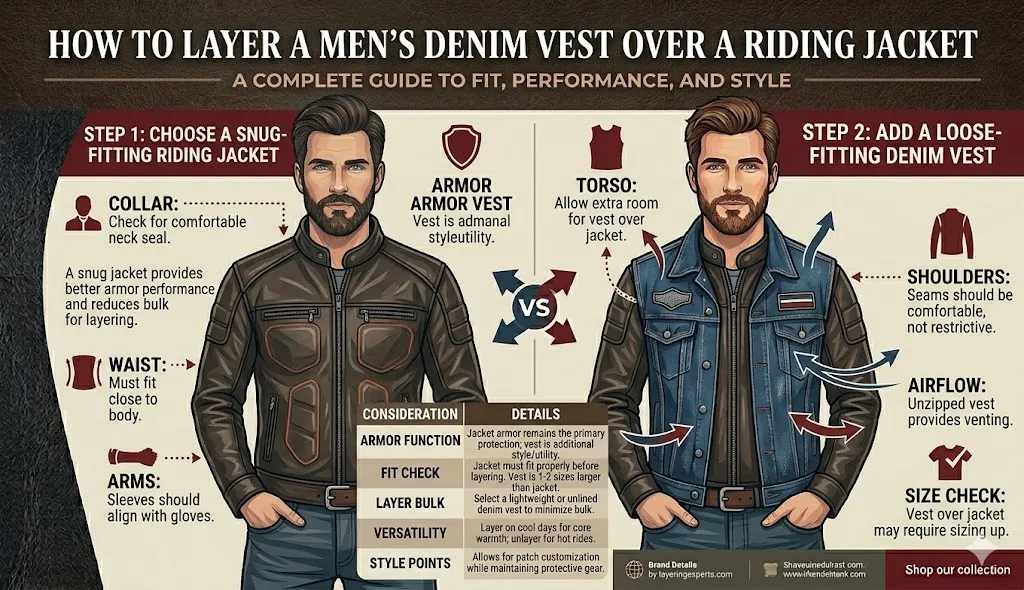
Layering a men's denim motorcycle vest over your riding jacket isn't just about style, though it definitely looks good. It's about customizing your protection, adding functionality, and adapting to changing conditions without carrying extra gear.
But throw on a vest over your jacket the wrong way, and you end up with bunched fabric, restricted movement, and a look that screams "I don't know what I'm doing."
Here's how to layer properly so your gear works together instead of fighting each other.
Why Layer a Vest Over a Jacket?
It seems counterintuitive at first. You're already wearing a jacket, why add another layer on top?
- Extra wind protection: A vest over your jacket adds another barrier against cold air cutting through, especially across your core. This keeps your body temperature stable without overheating your arms.
- Club colors and patches: Many riders wear their club vests or patched vests over jackets so their colors are visible. A slim fit men's denim biker vest over a leather or textile jacket puts your affiliation on display while keeping your protective jacket underneath.
- Quick temperature adjustment: Strip off the vest when it warms up without losing your jacket's protection. Add it back when temperatures drop. It's faster than changing jackets entirely.
- Pocket space: More layers mean more storage. Your jacket has pockets. Your vest has pockets. Combined, you've got room for everything you need without stuffing it all in one place.
- Style flexibility: A vest changes the look of your jacket instantly. Same jacket, different vest, completely different vibe.
The key is making sure the layers actually work together functionally, not just aesthetically.
Choosing the Right Vest for Layering
Not every mens motorcycle denim vest layers well over jackets. Here's what to look for:
Size Up Slightly
A vest meant to be worn over a jacket needs to fit larger than one worn directly over a shirt. If your normal vest size is large, you'll likely need an XL when layering over a bulky jacket.
The shoulders should still sit at your natural shoulder point, but the chest and armholes need extra room to accommodate the jacket underneath without pulling tight.
Side Laces or Adjustability
Look for vests with side laces, buckles, or adjustable straps. These let you loosen the vest enough to fit over a jacket comfortably, then tighten it back down when wearing it alone over a shirt. Fixed-size vests without adjustability rarely work well for layering, they're either too tight over the jacket or too loose without it.
Longer Armholes
Deeper, longer armholes accommodate the bulk of jacket sleeves better. Shallow armholes dig into your arms when there's a jacket underneath, restricting movement and creating uncomfortable pressure points. Try the vest on over the jacket before buying if possible. Raise your arms like you're gripping handlebars. If the armholes bind or the vest rides up significantly, it's not the right cut for layering.
How to Layer Properly: Step-by-Step
Getting the layers right takes more thought than just throwing the vest on. Here's the process:
Step 1: Start with Your Base Jacket
Put on your riding jacket first. Zip or snap it completely closed. Adjust any waist straps, cuffs, or collar closures so the jacket fits the way you want it.
Make sure the jacket sleeves aren't bunched up at your wrists, they should extend naturally to where they're supposed to sit.
Step 2: Add the Vest Over the Jacket
Slip the vest on over your jacket. Don't try to close it yet, just get it positioned on your shoulders correctly. Check that the vest's shoulder seams sit at the edge of your shoulders, not sliding down your arms or pulling toward your neck. This is critical. If the shoulders don't align, the whole layer won't work.
Step 3: Adjust Armholes and Fit
Reach forward like you're gripping handlebars. The vest should move with you without binding under your arms or pulling tight across your back. If the vest has side laces or straps, adjust them now. Start loose, then tighten gradually until the vest sits close to your body without being restrictive.
Step 4: Close or Leave Open
Depending on the vest style and your preference, you can close it completely, leave it open, or snap just the middle snaps. For maximum wind protection, close it fully. For style or ventilation, leave it open or partially fastened. There's no rule, do what works for your ride and your look.
Step 5: Movement Check
Before you get on the bike, do a full movement test:
- Reach forward (handlebar position)
- Turn your torso left and right (shoulder checks)
- Lean forward (riding position)
- Raise your arms overhead
If anything pulls, binds, or restricts movement at any point, adjust the fit or reconsider whether that vest works for layering.
Common Layering Mistakes to Avoid
- Mistake: Using a vest that's too small. A vest sized for wearing over a shirt won't fit over a jacket. Don't force it. Size up or choose a different vest.
- Mistake: Bunching the jacket sleeves. If your jacket sleeves are pushed up or bunched at the elbows, they'll dig into your arms and cut off circulation. Smooth them out before adding the vest.
- Mistake: Ignoring the back length. When you layer, the back of your jacket can ride up. Make sure your vest is long enough to cover your lower back even when the jacket shifts.
- Mistake: Over-tightening side laces. Cinching the vest too tight over a bulky jacket restricts breathing and movement. Leave some room. The vest should sit close but not compress.
- Mistake: Wearing incompatible styles. A fitted, tailored vest won't work over a bulky touring jacket. Match the vest cut to the jacket bulk—relaxed vests for bigger jackets, fitted vests for slimmer jackets.
When Layering Makes Sense (and When It Doesn't)
Layering a premium men's denim motorcycle vest over a jacket works well in certain situations:
- Club rides and events: When your club colors need to be visible but weather requires a jacket underneath.
- Cold morning rides that warm up later: Start with both, strip the vest off mid-ride when temperatures rise.
- Long-distance touring: Extra wind protection across your core reduces fatigue. Plus, the additional pockets are handy for storing snacks, maps, or small items.
- Style flexibility: Want the protection of a full jacket but the look of a vest? Layer them.
When it doesn't make sense:
- Hot weather (too many layers create overheating)
- Short commutes (not worth the hassle for 10-minute rides)
- Sport riding (aerodynamics and fit matter more than layering)
- When your jacket already provides everything you need
Don't layer just because you can. Layer because it solves a problem or improves your ride.
Styling Tips for Layered Looks
Layering doesn't have to look bulky or awkward. Here's how to keep it sharp:
- Match materials thoughtfully: Denim over leather looks classic and intentional. Denim over textile works too, especially if the colors complement each other. Avoid clashing textures that look like you got dressed in the dark.
- Keep colors simple: Black denim over a black jacket is safe. Blue denim works over black or brown leather. Avoid mixing too many bold colors or patterns between layers.
- Let the vest define the silhouette: The vest is the outer layer, so it sets the visual tone. Choose a vest style that creates the look you want, classic, patched, clean, rugged, and let it stand out.
- Don't over-accessorize: Layering already adds visual weight. Skip extra scarves, chains, or accessories that make the outfit look cluttered.
- Proportion matters: If you're wearing a bulky jacket, a longer vest balances the look better than a cropped one. Slim jackets pair well with shorter, fitted vests.
Care Considerations When Layering
Layering creates friction between the vest and jacket. Denim rubbing against leather or textile constantly can cause wear on both. Check both garments regularly for signs of rubbing, fading on the denim, scuffing on the jacket. Rotate which vests you layer to distribute wear.
If your vest has metal hardware (snaps, buckles, zippers), make sure it's not scratching or damaging the jacket underneath. Position hardware carefully or add a thin layer of fabric between if necessary. Clean both pieces according to their material requirements. Dirt and debris trapped between layers accelerate wear.
Bottom Line: Layer with Purpose
Layering a men's denim biker vest over your riding jacket works when it's done intentionally. Size correctly, adjust properly, and make sure the combination actually improves your ride instead of just looking cool in the mirror.
The right layering setup gives you flexibility, function, and style. The wrong setup gives you restriction, discomfort, and regret five miles down the road.
Test it before you ride. Adjust until it moves with you. And if it doesn't work, don't force it.
Related read: How to Choose the Right Motorcycle Vest for Long Rides